April 20, 2026
This was the last song Shuffle Play hit me with as I closed the last few minutes of my drive to work. It’s a different feel than the usual anxiety and low-key terror that I start my day with.
A formative song which I suspect is at least partially responsible for my current favored musical sounds was recorded and released before I was born,
My parents had purchased The Monkees' Greatest Hits for me because I really enjoyed watching re-runs of The Monkees on TV in the late afternoons after school. This would have been in the late 1970s or the very early 1980s. I was super dismayed to have my bubble burst in that they weren't currently really a band or making more TV, even in those days.
One of my favorite songs on their Greatest Hits record was Pleasant Valley Sunday, which was probably one of their more famous tracks, but I had no idea about their actual fame, their pre-fab reputation, or the popular influences they might have been incorporating or responding to.
So I knew nothing specifically about wall-of-sound techniques, or how much it had been done, and by whom, prior to that point in my life.
I was a kid. Some afternoons I would sit by myself next to my parent's Montgomery Ward console stereo, plug in a pair of dad's Realistic headphones and play records.
So. Peasant Valley Sunday has a very recognizable guitar riff and a clever lyric and that thing that happens at the end with reverb and repetition where you follow all of the elements of the song into a sort of cacaphony that ends in an orchestral drone. I used to pick an element, the guitar riff, or a vocal element, and see how long I could follow it until I lost track of it in the mix.
I wouldn't learn about Phil Spector and the Wall of Sound techniques or recording techniques and effects at all for another decade.
However, I note with increasing frequency, the music I really love today, shoegaze and nu-gaze and the things that sound that way, I have been thinking of that one track produced by a group of guys on an album where they really did play their instruments and wanted a little bit of credit for being more than goofy actors.
The fun starts with the drum roll at about 2:32.
What artist or band changed your music taste forever? Pick your favorite song of theirs..
I had known of them for a year or more before I ever heard them.. The record store in the student union at Mankato State had an import selection kept in a locked case. Cocteau Twins CDs always seemed to be featured. I liked their name, wondered if there was anything to do with Jean Cocteau, and found their cover art mysterious, but they cost enough more than domestic releases that I didn't feel like I could afford to gamble and lose.
Then, one day watching MTV in my third year, circa 1988 or 1989, I saw and heard "Carolyn's Fingers" -- and I recognized the band name from the import discs. And then I knew.
In the intervening years I think I have every album represented in my collection, though I may not have every EP.
So, yeah, I was already listening to Depeche Mode and Frankie, and The Cure and New Order, so perhaps it was inevitable. But if you ask me, Finding Cocteau Twins kicked open some other sub-genres for me which fundamentally affect what I choose to listen to, today.
No one other band I'm aware of sounds like them, but I've been surprised by how many artists mention them.
I won't try to describe or define their sound. I have always found language completely inadequate and I find myself wanting to make musical noises instead. It's easy enough instead to find them on YouTube or Spotify or Apple Music. Or your library if you're into the legacy media thing.
There is a YouTube documentary called Before Loveless: How Shoegaze Became Shoegaze, which centers around a different group and sound, but it holds Cocteau Twins in a place of honor and gives you an idea of a place and a time.
If you hang around me, you may get sick of me recommending Cocteau Twins. But I expect I always will.
Also, when I mention them, it's a test.

We never wax steady we wax and wane.
This one hits a little harder. Very faithful cover but with Deftone’s drummer handling the rhythm where I’m certain the ‘Twins used a machine.
Echodrone is definitely one of my favorite bands. I have been listening to them since I rediscovered bands were still making Shoegaze in the 2000s. They just released Music for 6 Musicians I think on the 27th, and today I noticed Apple Music recommended the new album to me. I bought it 4 tracks in, and basically listened to it twice straight through. The version of the album I bought has a 40+ minute Director's Cut at the end which is effectively the full album as a single track. Loved it both times. Movement II, which I have linked to for the purposes of this post, is exemplary.
I found out about this song reading a Wikipedia entry about another possibly infamous performance art track that stole or borrowed heavily from it. I wish I had known about Sleeper in Metropolis sooner. This is very much a product of its era, released in 1983, and now I have another artist's entire career to explore.
At any rate, the parallels musically between Sleeper in Metropolis and Tales of Taboo are inescapable and unmistakable. For that reason, the second track falls a little in my esteem, even if the production is amazing and it would have been an excellent 2AM track in an early 90s underground dance club. I won't link to Tales of Taboo for a dozen reasons. Read about it first. Read about Karen Finley's work.
But Anne Clark, I didn't know you before now. You have helped me make some musical connections that didn't exist before. (See also: Nicole Blackman)
And I'm grateful.
I personally feel that Crystal Method’s music has a kind of rock and roll swagger.
This track uses audio of Iggy Pop talking about an aversion to classification, describing what he does not want in favor of just being.
This reminds me of a Buddhist practice I have heard of in which you state internally “I am not x” in response to an adjective or role that may occur to you in order to get to the non-self.
This track won’t take you to that place.
It does have a mean groove. It’s deconstructed and has a good amount of reverb, which I dig.
I listened to it on the way to work this morning and let it play out in the parking lot before heading to my desk.
I love it.
Shout, the original Tears for Fears song, was the reason for one of the few times I heard a song in a store and bought the album immediately.
This cover of Shout, by Child Seat, a group I only learned existed tonight, is amazing.
Share a song that tells a great story.
Well, I'm a Minnesotan and I was listening to radio stations when this song was released in 1976. As a very young man at the time, this story hit me hard.
It is a sad song about a wreck on the Great Lake they call Gitchi-gami
IYKYK
I just reread the Wikipedia article about the song and I learned some facts, including that the melody was taken from an Irish dirge. It occurs to me that the famous guitar sound would also work on traditional acoustic instruments. Forgive me if there are covers of the song done just that way.
Perhaps surprisingly to folks who know me well, I have a playlist called “Happy.”
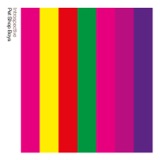
It started with It’s Alright, by Pet Shop Boys, specifically the version from the Introspective compilation.
The rhythm is pretty straight disco, but the synth baseline is kinda funky and staccato. The version from the Introspective comp begins with a choir singing the eponymous phrase.
And for me, another selling point are the various harmonies that come and go, various break downs, and points at which it becomes almost orchestral in its vastness.
It’s a mood.
I hope you can pick up what it lays down.
Share the songs that made you. Create your own account today!